A mite is not an insect
It has eight legs rather than six, and it is about a third of a millimetre long. You will not see one by looking at the mattress.
A mattress report on the mites you cannot see
Dust mites are not insects and not a sign of a dirty home. They live on shed skin and humidity, and a Singapore bedroom at around 82% relative humidity is close to ideal for them. This page is about what a clean can change, what it cannot, and why the health claims deserve a second look.
Same-day reply, daily 9am to 9pm. No payment to enquire. Your care label decides whether a wet clean is allowed, so we ask for it first.
Updated
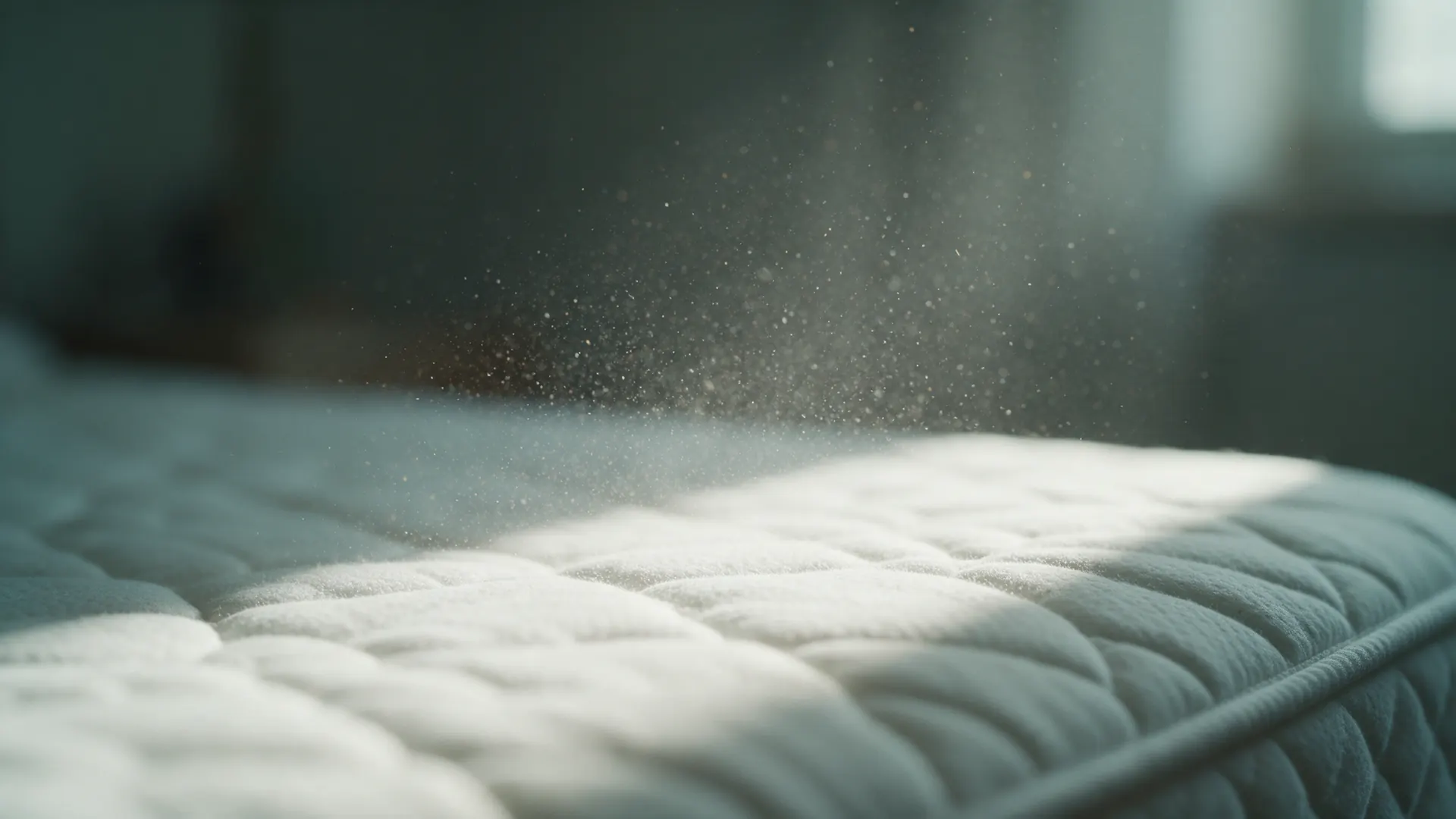
It has eight legs rather than six, and it is about a third of a millimetre long. You will not see one by looking at the mattress.
The food is skin scales people leave behind, not visible dirt. A mattress collects them in the cover and the seams, where a vacuum can reach.
Mites take water from the air. Singapore relative humidity sits near 82% most of the year, which is close to ideal for them.
Blomia tropicalis and Dermatophagoides pteronyssinus are the two names a Singapore allergy test usually reports.
Mite bodies and faecal material carry the allergen. Killing a mite does not take that material out of the bed.
A mattress clean deals with what is in the mattress. Mites depend on three things, and only one of them is in the bed.
Arlian and colleagues found that keeping mean daily relative humidity below 50% restricts population growth, even when humidity rises above 50% for two to eight hours a day. Singapore air spends most of the year well above that line.
Mites also have high reproductive potential. Unless a reduction is thorough, densities return to high levels quickly when food and humidity remain, so a clean is judged by what it removes and what it changes, not by a single count on the day.
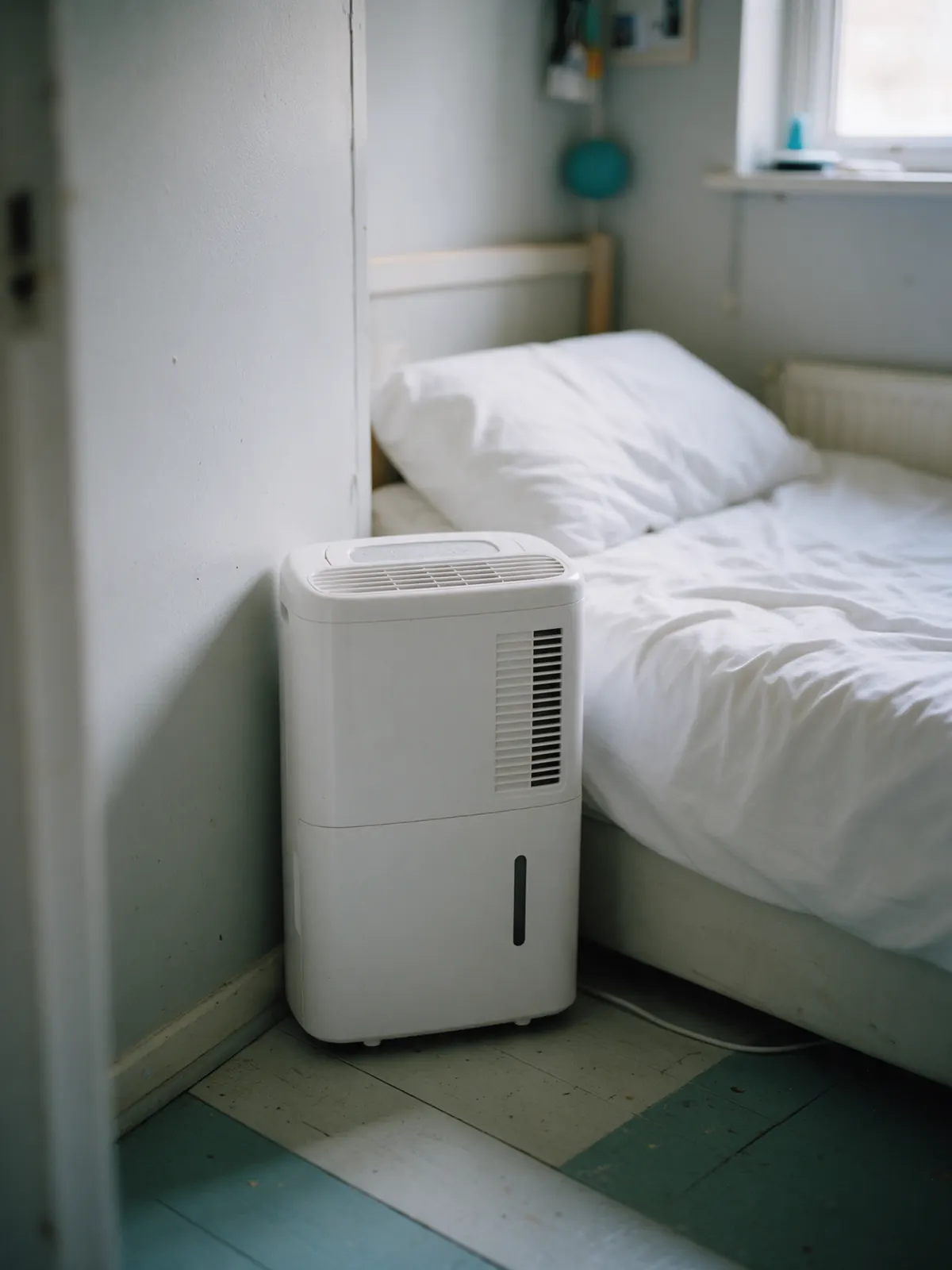
Dust mites Singapore households react to are usually two species, and the local allergen evidence is more specific than a generic mite spray suggests. Among 124 Singaporean rhinitis subjects, 50% were positive to Blo t 5 and 43% to Der p 1, and sensitisation to Blo t 5 was more prevalent than to Der p 1 or Der p 2.
That matters because the two allergens are not interchangeable. Blo t 5 comes from Blomia tropicalis; Der p 1 comes from Dermatophagoides pteronyssinus. A test or a product aimed at one does not automatically cover the other, and an allergen measured in a dust sample is not the same thing as a live mite count.
The practical answer is less exciting than a spray. Remove what the fabric holds with a vacuum and a hot wash where the care label allows it, keep the humidity down, and use a sealed encasement if allergy is the concern. Then repeat, because the room refills the bed.
| Compared | Vacuuming | Hot wash of bedding | Humidity control |
|---|---|---|---|
| Pros | Pros · VacuumingRemoves dust, mites and allergen the nozzle reaches. | Pros · Hot wash of beddingRemoves allergen from sheets and pillowcases. | Pros · Humidity controlChanges the conditions mites depend on. |
| Cons | Cons · VacuumingSeams and deep foam are less certain. | Cons · Hot wash of beddingDoes not touch the mattress; the label sets the temperature. | Cons · Humidity controlNeeds to be sustained, not an hour on a wet afternoon. |
| Best for | Best for · VacuumingSurface dust and the allergen reservoir in fabric. | Best for · Hot wash of beddingWeekly bedding care. | Best for · Humidity controlLasting control between cleans. |
| Avoid if | Avoid if · VacuumingYou expect it to end mites for good. | Avoid if · Hot wash of beddingThe care label rules out a hot wash. | Avoid if · Humidity controlIt runs only on a few dry afternoons. |
There is no permanent removal, only control. That is not a sales failure; it is what the biology allows, and it changes what a clean is worth to you.
Send the label and a photo of the seams. We tell you what a clean can reach, and what stays a job for bedding, humidity or a doctor. No payment to enquire.
A mite treatment is often sold as one idea. These are different measures with different targets, and the evidence for each is not the same.



A clean can remove dust and allergen from the surface it reaches. It cannot make the room dry or settle a medical question. Send the label and we will say which part of that applies to your mattress. No payment to enquire.
WhatsApp the labelA written quote names the method, so you can check it against your care label and warranty terms.
“I keep cleaning outcomes separate from medical outcomes. Removing dust does not, by itself, establish asthma relief.”
The founder, Mattress Cleaning SG
The evidence behind that line: a Cochrane review of 55 randomised trials with 3,121 people with asthma found no effect of mite-control measures, mattress encasings included, on asthma outcomes. A separate Cochrane review of mite reduction for eczema could not determine clear implications for practice from very low-quality evidence. This is general information, not medical advice: for allergy, asthma or infection concerns, consult a doctor.
We quote each mattress by size, method and condition after the care label is checked; we do not publish a list yet. These are rates three providers advertise, so you can test any quote, ours included, against the market.
| Provider, method | Single | Queen | King |
|---|---|---|---|
| Helpling, UV-C | S$65 | S$75 | S$80 |
| Helpling, steam | S$80 | S$100 | S$120 |
| Three Butlers, deep | S$100 | S$120 | S$130 |
| Sureclean, wet extraction | from S$125 | from S$165 | from S$195 |
No payment to enquire. A written quote names the method, so you can check it against your warranty terms. Every rate and extra is on the price breakdown page.
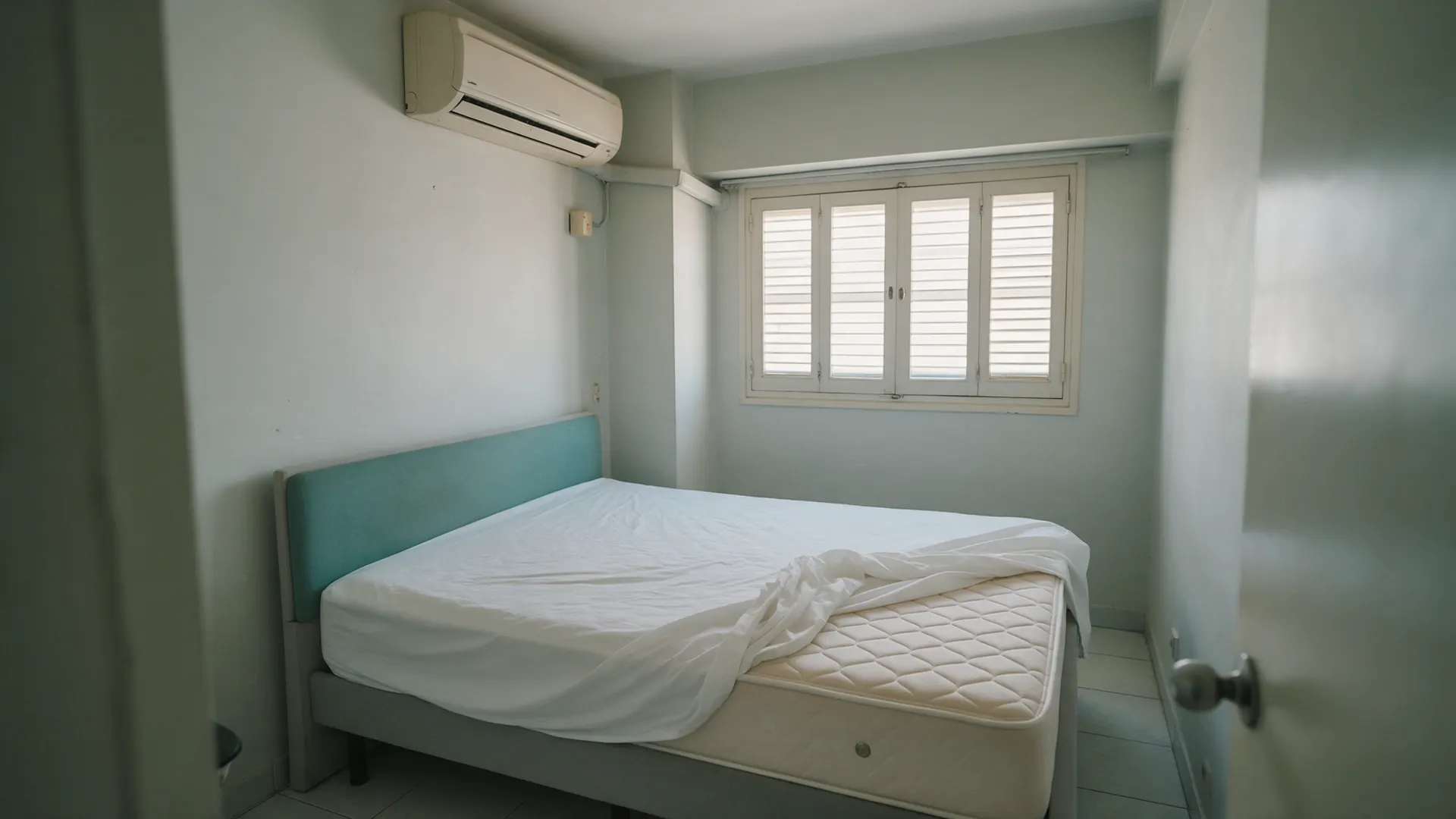
Meteorological Service Singapore puts the mean annual relative humidity at around 82%, rising above 90% before sunrise and falling to about 60% on a dry afternoon. A mattress spends its life in that air, so the conditions around the bed decide how long a clean holds.
A clean removes the mites and dust it reaches. The next step is the one that lasts: lower the humidity, keep the bedding washed, and use an encasement where allergy is the concern. If the mattress is foam and the label says keep it dry, a wet clean is not the answer, whatever the package is called.
What each method does to the layers is set out on the cleaning methods page; the drying plan for a wet clean is on the deep-cleaning page. What a before-and-after photograph can and cannot prove is on the before-and-after page.
Fans and open windows move air through the room. Air conditioning dries the air it cools. Neither holds a low humidity by itself.
Sheets and pillowcases take the closest contact. Wash them at the hottest temperature the care label allows, and dry them fully.
A sealed cover traps mites and allergen inside and keeps new ones out. It is a barrier, not a substitute for cleaning.
Nine short answers. If yours is about mould, bed bugs or a price, the answers page covers it; if it is about a symptom, a doctor is the right person.
Dust mites are eight-legged arachnids, not insects, and they are too small to see without magnification. They feed on shed skin scales and thrive where humidity stays high, which is why a Singapore bedroom suits them.
You cannot see them by looking. An allergy test shows sensitisation; a dust sample can measure allergen, not live mites. Every home has some, so the useful question is whether the number and the allergen load can be reduced, not whether mites are present.
You reduce them rather than remove them for good: vacuum the surface and seams, wash bedding at the hottest temperature the care label allows, use a sealed encasement if allergy is the concern, and keep humidity down. A professional clean removes what it reaches that day.
Some methods kill mites on the surface they treat. That is not the same as removing the allergen, and it does not change the humidity and food supply that let numbers recover. A clean is a reset, not a cure.
No. The allergen persists in mite bodies and faecal material, so removal matters as much as killing. That is why vacuuming, washing and encasement are judged by what they take out of the bed, not only by what they kill.
We do not promise that. A Cochrane review of 55 randomised trials with 3,121 people with asthma found no effect of mite-control measures, encasings included, on asthma outcomes. A separate review of mite reduction for eczema could not determine clear implications from very low-quality evidence. This is general information, not medical advice; consult a doctor.
Keeping mean daily relative humidity below 50% restricts population growth, even when humidity rises above 50% for two to eight hours a day. At 50%, significant proportions of a population survived for 10 weeks, so the low level has to be held for a long time, not for an afternoon.
No. They feed on shed skin and live in fabric and dust, so every home has them. Cleaning reduces the supply and the allergen load; it does not make a home sterile, and a spotless room at 82% humidity can still suit them.
Not permanently. Control means lowering the food and the humidity they depend on, and removing allergen regularly. A single treatment, however thorough, is followed by the same air and the same shed skin.
Photograph the care label and the seams, and tell us the size and what you have noticed. We reply the same day with a method, a drying plan and a whole price, or with the reason a clean is the wrong answer for this mattress.
Same-day reply, daily 9am to 9pm. No payment to enquire. We make no medical claim, and no licence or guarantee we cannot show.