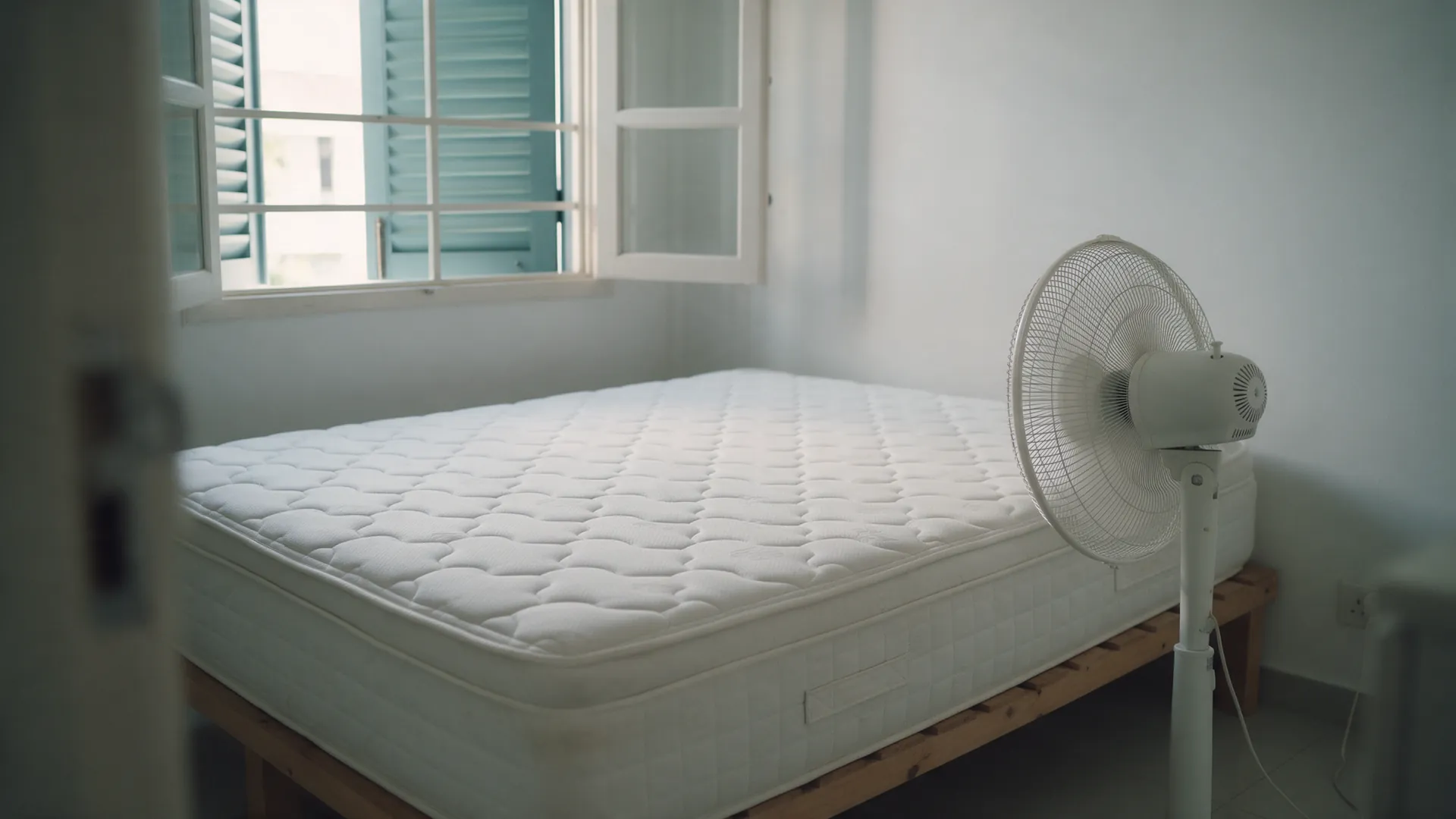
Deep cleaning, with the drying planned first
Mattress Deep Cleaning, and When It Is the Wrong Answer
Mattress deep cleaning in Singapore usually means hot-water extraction: water and a cleaning solution go into the top layers, and most of it is pulled back out. It can lift stains and odour a vacuum cannot reach. It also leaves a damp mattress in humid air, and it cannot fix every problem.
Same-day reply, daily 9am to 9pm. No payment to enquire. Your care label and warranty terms decide whether water is allowed at all, so we ask for the label first.
Updated
Where the water goes in a deep clean
A deep clean is a round trip for water. What matters is how much of it makes the trip back.
- Water and a cleaning solution go into the cover and the comfort layer, where stains and odour sit.
- The extractor pulls most of it back out, carrying the loosened soil with it.
- Some moisture always stays behind in the foam.
- Airflow and time take out the rest. That is the drying plan.
- Mould grown deep into the foam is beyond the reach of this round trip.
What deep mattress cleaning reaches, and what it does not
“I look beyond visible improvement when the concern involves mould, allergens or internal contamination.”
The founder, Mattress Cleaning SG
A deep clean is judged by the problem it was booked for. This is the honest split.
Usually within reach

Stains in the top layers
Mattress stain removal works best on sweat marks and spills in the cover and comfort layer. Old, set stains may fade rather than vanish; we say which to expect before you book.

Odour in the cover
Cleaning the layer that holds the sweat or the spill removes the source of the smell, rather than covering it with fragrance.

Built-up dust and debris
Vacuuming the surface and seams first lifts the dry soil, so less of it turns to mud once water goes in.
Outside its reach

Mould grown into the foam
US EPA guidance says mould in porous materials may be difficult or impossible to remove completely, and porous items may have to be thrown away. We tell you before booking.

Dust mites coming back
A clean removes what it reaches today. In air near 82% relative humidity, mite numbers recover; the drying chapter below explains why.

Bed bugs in the frame
Bed bugs hide in the frame, the seams and the furniture. That is a pest control job first; a clean can follow it.
Tell us the problem and send the label. If deep cleaning is the wrong answer, or your warranty terms rule out water, you hear it before you pay anything. No payment to enquire.
WhatsApp the labelThe drying plan comes before the water
“I place particular emphasis on drying conditions rather than a universal promise about when a mattress will be ready.”
The founder, Mattress Cleaning SG
A promise that every mattress is dry in a fixed number of hours ignores the room it sits in. We plan the airflow and the timing for your bedroom before any water goes in.
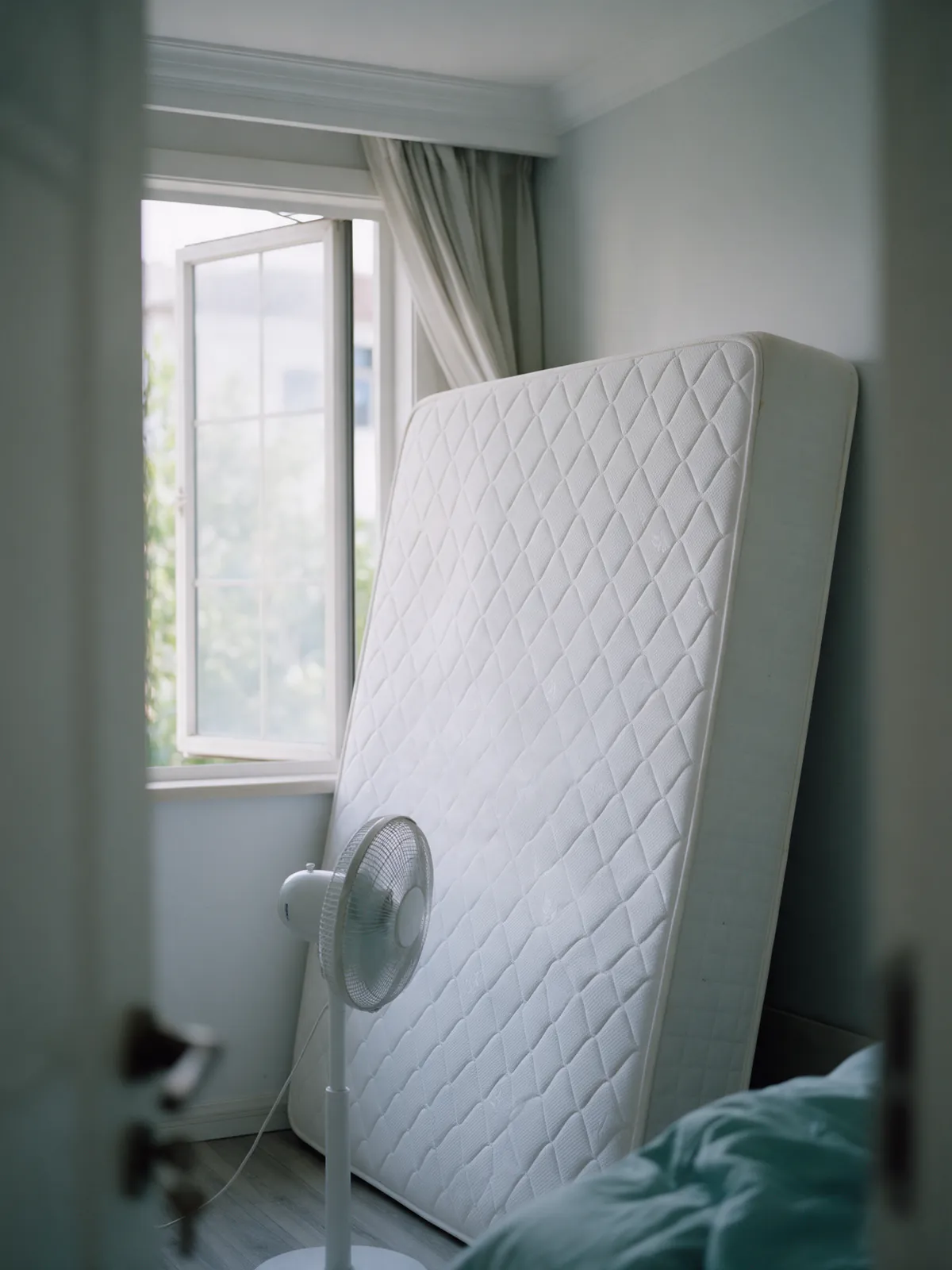
Drying a mattress in Singapore air
Meteorological Service Singapore puts the mean annual relative humidity at around 82%, rising above 90% before sunrise. A damp mattress dries into that air, so the plan matters more than the machine.
Humidity matters for dust mites too. Laboratory work by Arlian and colleagues found that significant proportions of mite populations survived for 10 weeks at 50% relative humidity, and that humidity at or under 50% has to be held for long periods to reduce them by drying. A quick dry after a clean does not do that.
| Compared | Hot-water extraction | Vapour | UV-C |
|---|---|---|---|
| Pros | Pros · Hot-water extractionReaches stains and odour held in the cover and comfort layer. | Pros · VapourLess water than extraction; heat mostly on the surface. | Pros · UV-CNo water goes in at all. |
| Cons | Cons · Hot-water extractionLeaves moisture in foam and needs airflow and time. | Cons · VapourThe care label can still rule it out for the core. | Cons · UV-CDoes not lift stains or reach seams and layers. |
| Best for | Best for · Hot-water extractionStains, odour and heavier soiling in the top layers. | Best for · VapourA light surface refresh where heat is allowed. | Best for · UV-CDust and surface treatment, not stain removal. |
| Avoid if | Avoid if · Hot-water extractionMould has grown into the foam. | Avoid if · VapourThe label rules out heat or moisture. | Avoid if · UV-CYou expect a stain or odour gone. |
What a drying plan covers
- Which side is cleaned, and how much water each method puts in.
- Fans and open windows, or air-conditioning, for your room.
- When the mattress can be covered and slept on again.
- What to watch for afterwards: a damp smell or a cool patch means it is not dry yet.
What deep cleaning costs, as advertised
We quote each mattress the same day by size, method and condition, and we do not publish a list yet. These are the deep-clean and extraction rates three providers advertise, so you can test any quote, ours included.
| Provider, method | Single | Queen | King | Super king |
|---|---|---|---|---|
| Three Butlers, deep | S$100 | S$120 | S$130 | not listed |
| Helpling, extraction | S$120 | S$150 | S$175 | S$225 |
| Sureclean, dry extraction | from S$105 | from S$140 | from S$165 | from S$190 |
| Sureclean, wet extraction with stain removal | from S$125 | from S$165 | from S$195 | from S$225 |
Ask before you book a deep clean
- One side or both? Three Butlers lists the bottom surface as an extra charge.
- Is stain treatment included, or priced per stain?
- How will the mattress be dried, and when can it be used again?
How we chose and priced this
Deep cleaning here means hot-water extraction, chosen by the Mattress Cleaning SG label-first method: the problem and the care label come first, then the process. Water and a cleaning solution go into the cover and comfort layer, and the extractor pulls most of it back out. The quote names one method, says whether both sides are included, and sets a drying plan for the room. The advertised rates above were read on 12 November 2026.
The Mattress Cleaning SG label-first method
- Define the problem. Soiling, stain, odour, moisture, mould, allergens, bed bugs or a claimed pathogen risk are different jobs.
- Check the care label. Read the model's care instructions; a washable cover is not the foam beneath it.
- Name the method. Vacuum, hot-water extraction, vapour, chemicals, UV-C or ozone: say which, and what it implies.
- Match evidence to the promise. Ask what was measured, where, and whether it supports the specific claim.
- Plan the drying and the limits. Moisture, ventilation, exposure, material risk, and when cleaning is the wrong answer.
- Quote the whole price. Size, method and condition decide it; anything extra is named before booking.
No payment to enquire, and a person replies the same day. A written quote names the method, so you can check it against your warranty terms. GST and every extra are on the mattress cleaning price page.
Questions about mattress deep cleaning
Ten short answers. For a mattress that may not need water at all, read mattress steam cleaning or compare every mattress cleaning service.
What is the best way to deep clean a mattress?
The best method is the one the care label allows that also reaches your problem. For dust, a thorough vacuum of the surface and seams. For stains and odour in the top layers, controlled extraction with a drying plan. For mould inside foam, cleaning is often the wrong answer and replacement is the honest one.
How do you get deep stains out of a mattress?
Stains that soaked past the cover sit in the comfort layer. Controlled extraction can lift many of them, but pushing more water in to chase a stain can spread it and slow the drying. Some set stains only fade. We look at a photo before saying which to expect.
Is deep mattress cleaning the same as steam cleaning?
Often the two names describe the same hot-water extraction, and sometimes steam means vapour on the surface only. Ask which process is used and how much water goes into the mattress.
How long does a mattress take to dry after a deep clean?
There is no honest single number. It depends on how much water went in, the airflow and the day. Singapore humidity averages around 82%, so we plan the drying for your room and tell you when it is ready, rather than promising a fixed time.
Can deep cleaning remove mould from a mattress?
Surface spots on the cover can sometimes be cleaned. Mould that has grown into foam is different: US EPA guidance says porous materials may have to be thrown away, because mould can be difficult or impossible to remove completely from them.
Will a deep clean get rid of dust mites?
It removes mites and debris from the surface it reaches. In Singapore air, numbers recover when food and humidity remain, so lasting control depends on humidity and regular washing of bedding, not on one clean.
Does deep cleaning affect my mattress warranty?
It can, if the method breaks the care instructions. A label may rule out wet cleaning or steam for the core. Read the warranty terms and the label first; we ask for both before quoting.
Will deep cleaning help my allergies or asthma?
We do not promise that. A Cochrane review of 55 trials found no effect of mite-control measures, mattress encasings included, on asthma outcomes. This is general information, not medical advice: for allergy, asthma or infection concerns, consult a doctor.
How often does a mattress need a deep clean?
There is no fixed interval. Some providers advise every three to six months, but how often depends on the problem, pets and spills. A washable protector does more week to week than an occasional deep clean.
What should I do before the cleaner arrives?
Strip the bedding, clear the floor around the bed, and plan to keep the room ventilated afterwards. Photograph the care label so the method can be checked against it.
Send the label, find out if a deep clean fits
Photograph the care label, the stain or the problem, and the mattress, and tell us the size. We reply the same day with a method, a drying plan and a whole price, or with the reason a deep clean is the wrong answer.
When this is the wrong answer
- Mould grown into the foam: US EPA guidance says porous items may have to be thrown away.
- Bed bugs beyond the mattress: the frame and room need pest control first.
- A mattress the care label says must stay dry, or one with a failed core.
Risks and common mistakes
- Some moisture always stays in foam; a closed room in 82% air slows drying.
- Chasing an old stain with more water can spread it and lengthen drying.
- A wet clean that breaks the label can affect the warranty.
Same-day reply, daily 9am to 9pm. No payment to enquire. We claim no licence or guarantee that we cannot show you; ask for the paperwork.
- You send the label, a photo of the stain or problem, and the size.
- We reply the same day: the method, how it will dry, and the whole price.
- You decide. The quote is yours to compare before anything is booked.
More on mattress cleaning services
Where we clean